

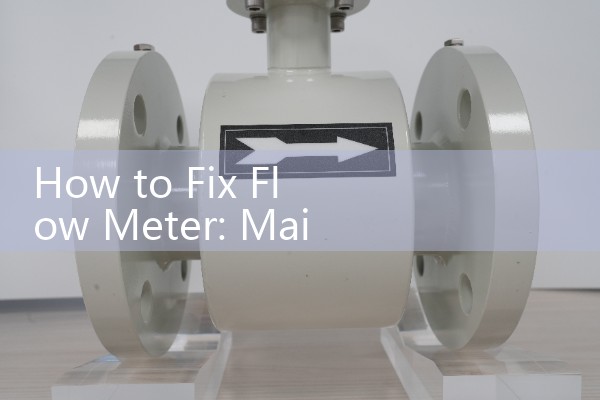
『How to Fix Flow Meter: Maintenance often involves inspecting for air pockets or debris. For electronic or industrial meters, consult the manufacturer’s manual regarding electrode cleaning and voltage verification.』Related information(v cone flow meter|rotary gas meter|gallon meter|gear meter|metal tube rotameter|glass tube rotameter|nutating disk meter|transit time ultrasonic flow meter|wedge flow meter|pd meters|hydraulic flow meter|ultrasonic water flow meter|water flow meter|air flow meter|magnetic water flow meter|oxygen flow meter|gas flow meter|argon flow meter|air velocity meter|gasoline flow meter|fuel flow meter|ultrasonic water meter|digital water meter|nitrogen flow meter|solid flow meter|Oxygen tank flow meter|digital water flow meter|diesel fuel flow meter|steam flow meter|02 flow meter|compressed air flow meter|oil flow meter|liquid flow meter)
How to Fix Flow Meter Issues: Air Pockets, Debris and Electrode Checks
Quick Answer: Most flow meter faults come from air pockets, debris, wiring faults or fouled electrodes. Maintenance often involves inspecting for air pockets or debris. For electronic or industrial meters, follow the manual from the manufacturer for electrode cleaning and voltage verification.
Isolate the Symptom Instead of Replacing the Meter
A flow meter rarely fails without a visible symptom. Field readings may jump, freeze, drift or drop to zero. In practice, most engineers skip this part and replace a meter too early. Ask three questions before opening the housing. Is the reading erratic or dead? Does the error appear at low flow or high flow? Did the process change recently?
We have seen this on customer sites many times. A water treatment plant in Malaysia reported a DN50 electromagnetic flowmeter reading 40 percent low. The pipe was full but the meter output was not stable. The cause was not the electronics. The problem was a grease film on the electrodes.
Inspect for Air Pockets or Debris
Air pockets are a common cause of flow meter drift. They affect electromagnetic flowmeters, Coriolis mass flowmeters and ultrasonic flowmeters. A seawater flow meter for a desalination plant often suffers from air pockets at the intake after a pump starts. If the pipe is not completely full or the meter sits at the highest point of the line, air can collect at the sensor. The reading may jump from 0 to 120 m3/h in two seconds.
Fix the hydraulic condition first. Install the meter in a low point or a rising pipe. Add a back pressure valve if the line drains after a pump stops. For wastewater lines with sludge or solids, debris can coat the liner or block the flow tube. A 200 micron strainer upstream helps protect small DN15 to DN50 meters.
Debris also damages oval gear flowmeters. A food oil producer in Vietnam had a DN25 oval gear meter that stopped turning. Particles from a pump wear ring lodged between the gears. For diesel service, viscosity around 3 cP is normal and should not stop the meter. Cleaning the gears and adding a Y strainer solved the issue.
Clean Electrodes on Electromagnetic Flowmeters
Electromagnetic flowmeters need a minimum conductivity, usually above 5 µS/cm. If the process fluid is water or wastewater, electrode fouling is common. Grease, scale, iron deposits or biofilm create an insulating layer. The meter may read low or output a noisy 4-20 mA HART signal.
Use the manual from the manufacturer for electrode cleaning. Remove the meter only if the process is shut down and safe. For many Silver Instruments SIL-MAG electromagnetic flowmeters, 316L electrodes are standard for water and wastewater. Hastelloy electrodes suit chemical service. The electrodes are accessible from the liner side. Use a soft cloth and a weak acid solution. Do not use a wire brush or metal scraper. Rinse with clean water and dry the liner.
After cleaning, verify the voltage at the electrode terminals. A stable value with no process flow is a good sign. If the voltage drifts or falls near zero mV, check the wiring and grounding before replacing the meter.
Check Voltage, Wiring and Grounding
For electronic meters, voltage verification is not optional. A 4-20 mA
Grounding matters most on electromagnetic flowmeters with PTFE or polyurethane liners. A poor ground lets stray current enter the signal loop. The reading may change when a nearby pump starts. Install grounding rings if the pipe is lined or plastic. For ATEX Zone 1 installations, follow the local wiring code and check the earth resistance.
Test the Meter After Repair
So run a simple bench test. For a magnetic flowmeter, fill the tube with water and compare the display against a known volume. For a Coriolis mass flowmeter, check density and temperature values. A stable density reading near the process value and a PT100 temperature value close to the process temperature mean the sensor is healthy. For a vortex flowmeter, tap the pipe lightly and watch the output. If the reading spikes, the sensor may need a higher low-flow cutoff.
Record the values before and after repair. Note the pipe size DN, pressure in bar, temperature in °C, flow range in kg/h or m3/h, and the output signal. The record helps if the fault returns.
When to Contact Silver Automation Instruments
If the meter still drifts after cleaning and voltage checks, send us the symptom and a photo of the installation. We help customers in Southeast Asia, Oceania, Latin America, Africa and the Middle East. Call Silver Automation Instruments at +86-25-68650347. For quick messages use WhatsApp at +86-25-52155837 or WeChat at +86 15365082610. Send us your pipe size (DN), pressure (bar), temperature (°C), flow range in kg/h or m3/h, and a photo of the current installation. We will recommend a spare part, cleaning method or replacement model. Product datasheets are at flow-meter.com.au.
FAQ: Five Practical Questions
How do I fix a magnetic flowmeter with unstable readings? Check for air pockets first. Then inspect the electrodes and clean them if fouled. Verify the 4-20 mA HART output and the grounding path before replacing the transmitter.
What causes air pockets in a flow meter and how do I remove them? Air pockets usually come from pipe draining, pump suction leaks or mounting at the highest point. Move the meter to a low point, add a back pressure valve or vent the line before the meter.
Can I clean electromagnetic flowmeter electrodes without removing the meter? In many cases, yes. Shut down the process, close the isolation valves and drain the pipe. Use a soft cloth and a weak cleaning solution. Do not use metal tools on the liner or electrodes.
How often should industrial flow meters be inspected? Inspect flow meters every 6 to 12 months. For dirty water, oil or chemical service, check electrodes and strainers every 3 months. Record the readings so you can spot drift early.
When should I replace a flow meter instead of repairing it? Replace the meter if the liner is torn, the electronics are damaged by water or the sensor voltage is zero after cleaning. Also replace it if repair cost exceeds 50 percent of a new unit. A new DN25 electromagnetic flowmeter often pays for itself in one avoided batch error.
 Hot News
 Related AD