

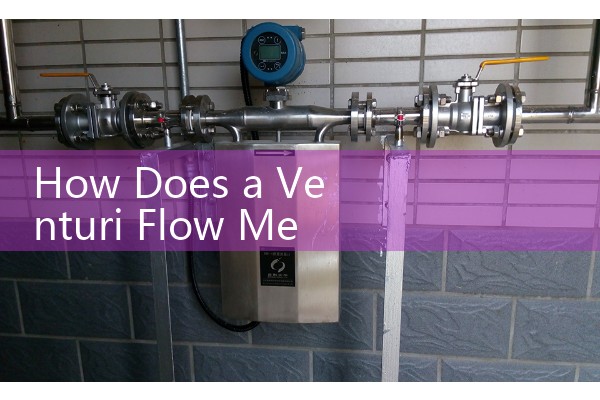
『How Does a Venturi Flow Meter Work: Utilizes a smooth pipe constriction to create a pressure drop that calculates flow velocities.』Related information(v cone flow meter|rotary gas meter|gallon meter|gear meter|metal tube rotameter|glass tube rotameter|nutating disk meter|transit time ultrasonic flow meter|wedge flow meter|pd meters|hydraulic flow meter|ultrasonic water flow meter|water flow meter|air flow meter|magnetic water flow meter|oxygen flow meter|gas flow meter|argon flow meter|air velocity meter|gasoline flow meter|fuel flow meter|ultrasonic water meter|digital water meter|nitrogen flow meter|solid flow meter|Oxygen tank flow meter|digital water flow meter|diesel fuel flow meter|steam flow meter|02 flow meter|compressed air flow meter|oil flow meter|liquid flow meter)

Venturi Flow Meter Working Principle and Selection Guide
Quick Answer: A Venturi flow meter uses a smooth pipe constriction to create a pressure drop between the inlet and the throat. The differential pressure is measured by a transmitter and converted into flow velocity and volumetric flow rate. Silver Automation Instruments supplies Venturi flow meters and dp transmitters for liquid, steam, gas, and slurry lines.
How the Venturi Flow Meter Creates a Pressure Drop
The Venturi flow meter has three main parts: an inlet cone, a straight throat, and a divergent outlet cone. Flow enters the inlet cone and accelerates as the pipe diameter narrows. Velocity increases at the throat. Static pressure decreases at the same point. A differential pressure transmitter reads the high side inlet pressure and the low side throat pressure. That difference is the pressure drop signal.
A DN100 Venturi meter with a beta ratio of 0.5 will typically produce a differential pressure of 25 kPa at 60 m3/h of water. The divergent outlet cone recovers most of the pressure energy. This is why Venturi meters have lower permanent pressure loss than orifice plates. A properly machined short form Venturi can recover around 80 to 90 percent of the differential pressure. In practice we see this benefit on cooling water lines where pump head is limited.
Flow Velocity Calculation and Output Signal
Flow rate is not linear with differential pressure. The relationship follows a square root function. A transmitter with square root extraction converts the dp signal into a linear 4-20 mA HART output. Some sites send the raw dp signal to a flow computer or PLC. The flow computer handles square root extraction and temperature pressure compensation.
For a typical DN80 Venturi flow meter on compressed air at 7 bar, a dp range of 0 to 10 kPa may represent 250 to 900 m3/h depending on the bore. Every Silver Instruments Venturi sizing request starts with process data: fluid, pressure, temperature, viscosity, pipe size, and maximum flow. We have seen a paint manufacturer in Vietnam order a DN50 Venturi for solvent flow at 4 bar and 30 °C. That unit needed a stainless steel body and a remote seal transmitter because the solvent was aggressive.
Installation and Straight Pipe Requirements
Venturi flow meters need straight pipe upstream and downstream to keep the velocity profile stable. A standard installation uses 10D upstream and 4D downstream for a long form Venturi. Some short form Venturi designs can work with 5D upstream and 2D downstream. Always check the beta ratio and upstream disturbance source. A partially open butterfly valve or a bend close to the inlet will hurt repeatability.
Install the dp transmitter below the pipe for wet gas or steam lines. Use impulse lines with a slope back to the process tap. Fill the impulse lines with water for steam service. We have seen this on a steam boiler feedwater application in the Philippines. The operator skipped the filling step and the transmitter read low for two days.
Accuracy, Materials, and Process Conditions
A Venturi flow meter accuracy is normally between ±0.5 percent and ±1.0 percent of actual flow after calibration. Uncalibrated short form units may be ±1.5 percent. The accuracy depends on the throat machining, the transmitter stability, and the installation. For custody transfer of natural gas in the Middle East, customers often request calibrated long form Venturi meters with AGA or ISO calculation methods.
Material options include c
Venturi Flow Meter vs Orifice Plate and Other DP Meters
Venturi meters have a higher initial cost than orifice plates. They are preferred where pressure loss must stay low or where the fluid contains solids. Orifice plates can plug or wear at the sharp edge. Venturi meters have a smooth bore and no sharp edge in the throat. For clean water and steam, an orifice plate may be enough. For raw water, sludge, or high viscosity liquids, the Venturi is the safer choice.
Common Applications in Southeast Asia, Australia, Africa, and Latin America
Silver Instruments has supplied Venturi flow meters for cooling water in Vietnam, boiler feedwater in the Philippines, seawater desalination in Saudi Arabia, and mining slurry water in Chile. These are not textbook lab installations. They are real sites with vibration, high humidity, and limited straight run. In most cases the customer sends us pipe size, fluid, flow range, pressure, and temperature. We return a selection with body material, beta ratio, dp range, and transmitter model.
Recommended Models and Sizing Data
For liquid lines up to DN600, we recommend a classical long form Venturi tube with a differential pressure transmitter. For steam and gas, use a 3 valve manifold, a steam siphon, and a HART enabled transmitter. For aggressive fluids, use a PTFE lined or diaphragm seal type. For simple water measurement, a short form Venturi with a compact dp flow meter is more cost effective.
Contact and Quotation Details
Send Silver Instruments your process data: fluid name, pressure in bar, temperature in °C, pipe size DN, minimum and maximum flow rate, and required accuracy. We will provide a Venturi flow meter selection with lead time and price. You can reach the team by Tel: +86-25-68650347, Whatsapp: +86-25-52155837 or WeChat: +86 15365082610.
FAQ: Venturi Flow Meter Selection
What is the minimum straight pipe run for a Venturi flow meter? A long form Venturi usually needs 10D upstream and 4D downstream. A short form unit with a flow conditioner may need 5D upstream and 2D downstream.
Can a Venturi flow meter handle dirty liquids? Yes. The smooth constriction does not have a sharp edge that catches solids. Venturi meters work on raw sewage, mining slurries, and liquid with suspended particles. Avoid clogging of impulse lines by using diaphragm seals or purge rings.
What is the typical accuracy of a Venturi flow meter? Calibrated long form Venturi meters can reach ±0.5 percent of actual flow. Standard industrial units are usually ±0.75 to ±1.0 percent. Short form or field assembled units may be ±1.5 percent.
How does a Venturi flow meter compare to an orifice plate? The Venturi has lower permanent pressure loss, handles solids better, and costs more. The orifice plate has lower initial cost but higher energy loss and a sharp edge that can wear.
Which fluids are suitable for a Venturi flow meter? Liquids, steam, gas, and slurries. Common examples include cooling water, boiler feedwater, natural gas, compressed air, seawater, chemicals, and raw sewage. Material selection changes with corrosion and temperature.
 Hot Blog
 Related AD