

『Flow Meter 2 Inch Pipe Installation Guidelines: Avoiding Turbulence and Signal Noise』Related information(v cone flow meter|rotary gas meter|gallon meter|gear meter|metal tube rotameter|glass tube rotameter|nutating disk meter|transit time ultrasonic flow meter|wedge flow meter|pd meters|hydraulic flow meter|ultrasonic water flow meter|water flow meter|air flow meter|magnetic water flow meter|oxygen flow meter|gas flow meter|argon flow meter|air velocity meter|gasoline flow meter|fuel flow meter|ultrasonic water meter|digital water meter|nitrogen flow meter|solid flow meter|Oxygen tank flow meter|digital water flow meter|diesel fuel flow meter|steam flow meter|02 flow meter|compressed air flow meter|oil flow meter|liquid flow meter)
Flow Meter 2 Inch Pipe Installation Guidelines Avoiding Turbulence and Signal Noise
Quick Answer
For a 2 inch pipe or DN50 line, install the flow meter with at least 10 straight pipe diameters upstream and 5 diameters downstream from any elbow, valve, pump, or tee. Keep the pipe full, remove air bubbles, ground electromagnetic flow meters correctly, and route signal cable away from power cable. Vortex, electromagnetic, Coriolis, and oval gear flow meters all behave differently, but turbulence and signal noise are the two main causes of poor repeatability on 2 inch lines.
Why Turbulence Breaks DN50 Flow Measurements
A 2 inch pipe is small enough that a single elbow close to a flow meter can create swirl. We have seen this on customer sites many times. A water treatment plant in Vietnam replaced an electromagnetic flow meter twice before the team checked the upstream piping. The meter sat 4 pipe diameters after a 90 degree elbow. The reading jumped plus minus 8 percent at 12 cubic meters per hour. Once the team moved the meter to a point with 12 diameters of straight run, the signal settled. Swirl and asymmetric velocity profiles hit electromagnetic and vortex meters harder than most engineers expect. In practice, a straight run problem looks like signal noise, but the root cause is hydraulic.
Required Straight Run for a DN50 Flow Meter
The 2 inch nominal size has an inner diameter near 52.5 mm for Schedule 40 stainless steel and 50.8 mm for many plastic or lined pipes. Use the actual inside diameter for straight run calculation. For electromagnetic flow meters, keep 10D upstream and 5D downstream. For vortex flow meters, keep 15D upstream and 5D downstream when a control valve or elbow is present. For Coriolis meters, zero stability is more important than straight run, but do not install the meter at the low point of a pipe with suspended solids. For oval gear flow meters, protect the meter from pulsation and install a strainer upstream because debris can damage the gears. In a 2 inch line, 10D is about 508 mm. That is a short distance, but many installers still ignore it because the space looks available.
Pipe Full Condition and Air Elimination
A flow meter installed in a 2 inch pipe that is only partially full will produce unstable readings. This is common in drain lines, open discharge, or horizontal runs after a tank. Mount the meter in the lowest horizontal section where back pressure keeps the pipe full. For vertical installations, flow should move upward. If air bubbles cannot be avoided, use an air eliminator or locate the meter upstream of aeration injection. A food and beverage plant in Thailand found that a DN50 electromagnetic meter reading dropped to zero every 20 minutes because an upstream pump was pulling air through a loose flange. The problem was not the meter.
Grounding and Signal Noise Control for 2 Inch Meters
Electromagnetic flow meters need a good ground reference. On a conductive metal pipe, connect the meter body to the pipe on both sides. On plastic or lined pipe, use grounding rings or grounding electrodes. A missing ground on a DN50 meter often shows up as a spiky 4-20 mA signal. Route the signal cable in a separate conduit from power cable. Keep at least 300 mm distance from variable frequency drive cables. Use shielded twisted pair cable and ground the shield at one end only. This is a rule that many panel buil
Installation Checklist by Flow Meter Type
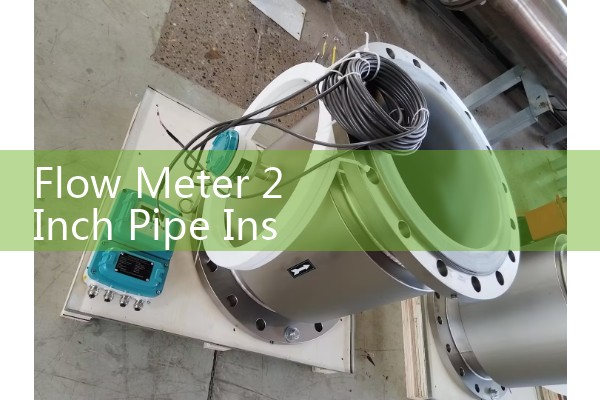
For an electromagnetic flow meter on a 2 inch pipe, check the liner, check the grounding, fill the pipe, and match the process liquid conductivity to the meter specification. For a vortex flow meter, verify upstream straight run, pipe inner diameter, and avoid vibration from pumps or compressors. For a Coriolis mass flow meter, mount the sensor in a way that avoids pipe stress and support the adjacent pipe. For an oval gear flow meter, verify fluid viscosity, install a strainer, and remove air. For a thermal mass flow meter, do not use it for changing gas composition unless the meter is calibrated for the actual gas mix. A chemical plant in Saudi Arabia reduced signal noise on a DN50 vortex meter by moving a pressure transmitter from the same pipe tap to a separate tap 6D downstream.
Common Installation Mistakes on 2 Inch Flow Meter Lines
The most common mistake is placing a control valve too close to the meter inlet. Install the meter upstream of the control valve when possible. If the valve must be upstream, add straight run. The second mistake is gasket protrusion. A gasket that intrudes into the pipe changes the velocity profile and can cause a 1 percent to 5 percent reading shift on a DN50 line. The third mistake is mismatched pipe inner diameter. A 2 inch Schedule 80 pipe has a different inner diameter than Schedule 40. Check the actual bore before ordering a vortex or electromagnetic meter. The fourth mistake is using one set of damping parameters for all fluids. A high damping value hides real process changes. Use the lowest damping that gives a stable output.
FAQ
What is the minimum straight run for a 2 inch flow meter?
For a DN50 electromagnetic flow meter, use 10D upstream and 5D downstream. For a vortex flow meter, use 15D upstream if an elbow or valve is present.
Can I install a flow meter after a control valve?
Yes, but only if you allow enough straight run. Better practice is to place the flow meter upstream of the control valve.
Why does my 2 inch electromagnetic flow meter show noise?
Check grounding, cable separation, pipe fill, and upstream turbulence. Missing grounding rings on plastic pipe are a frequent cause.
Do Coriolis flow meters need straight run on a 2 inch pipe?
Coriolis meters tolerate swirl much better than vortex or electromagnetic meters. But pipe stress and vibration can still affect zero stability.
How can I get a price for a DN50 flow meter?
Send us your pressure in bar, temperature in °C, pipe size in DN, flow range, and fluid type. We will recommend a model for your application.
Contact Silver Automation Instruments
Silver Automation Instruments supplies electromagnetic, vortex, Coriolis, oval gear, and thermal mass flow meters for DN50 and 2 inch pipe applications. Send us your pressure in bar, temperature in °C, pipe size in DN, and flow range. Contact us by Tel: +86-135-1213-1526, Whatsapp: 86-135-12131526, or WeChat: +86 13512131526. Our engineers also support installations in Southeast Asia, Oceania, Latin America, Africa, and the Middle East. Visit flow-meter.com.au for more technical notes.
 Hot Blog
 Related AD