

 Current position > News detail
『Flow Meter Air Compressor Installation: Monitoring Compressed Air Leak Costs and Efficiency』Related information(v cone flow meter|rotary gas meter|gallon meter|gear meter|metal tube rotameter|glass tube rotameter|nutating disk meter|transit time ultrasonic flow meter|wedge flow meter|pd meters|hydraulic flow meter|ultrasonic water flow meter|water flow meter|air flow meter|magnetic water flow meter|oxygen flow meter|gas flow meter|argon flow meter|air velocity meter|gasoline flow meter|fuel flow meter|ultrasonic water meter|digital water meter|nitrogen flow meter|solid flow meter|Oxygen tank flow meter|digital water flow meter|diesel fuel flow meter|steam flow meter|02 flow meter|compressed air flow meter|oil flow meter|liquid flow meter)
Flow Meter Air Compressor Installation: Monitoring Compressed Air Leak Costs and Efficiency
Quick Answer: Installing a flow meter on the air compressor discharge line gives you real compressed air demand data in kg/h or Nm3/h. A thermal mass flow meter or vortex flow meter tracks leaks, waste, and actual energy cost per cubic meter. Silver Automation Instruments supplies inline and insertion flow meters for air compressor pipes from DN15 to DN300 with 4-20 mA HART output.
Why Install a Flow Meter on an Air Compressor
Compressed air is expensive. Many plants treat it like a free utility because the compressor is already there. That mistake hides real operating costs. A flow meter on the air compressor discharge or main header changes this.
With a flow meter you see the total compressed air output. You also see the baseline when production is running and when it is not. A shift in the baseline often points to leaks or unwanted usage. Most engineers skip this part because the compressor amp reading feels like enough. Amps do not show air mass flow or leak losses.
We have seen this on customer sites many times. A paint manufacturer in Southeast Asia installed a thermal mass flow meter on a DN50 header. The data showed 22 percent of air was used during non production hours. That was mostly leaks and idle tools.
Compressed Air Leak Costs and How a Flow Meter Helps
A small leak in a compressed air system does not look serious. But a 3 mm hole at 7 bar can waste around 0.6 kWh per hour depending on ambient conditions. Over 8,000 hours per year that becomes real money. The flow meter gives you the total loss number in kg/h or Nm3/h.
Here is the thing. You cannot fix what you do not measure. A clamp on ultrasonic meter may struggle with dry air. Thermal mass and vortex meters are more practical for compressed air. In practice a thermal mass flow meter works well for low to medium pressure air lines. It is easy to install as an insertion probe with a hot tap or a ball valve.
Because compressed air leak surveys are often a one time event, plants miss new leaks. A permanent flow meter monitors the base load every shift. If Sunday air consumption rises from 18 kg/h to 31 kg/h, maintenance knows there is a new leak or an open drain valve.
Flow Meter Types for Compressed Air Systems
Silver Instruments recommends two main types for compressed air monitoring.
Thermal mass flow meters measure mass flow directly. They are good for dry compressed air, nitrogen, and mixed gas lines. They handle pipe sizes from DN15 to DN300 using inline or insertion versions. Typical accuracy is around plus or minus 1.0 to 1.5 percent of reading. Outputs include 4-20 mA HART, Modbus RTU, and pulse.
Vortex flow meters measure volumetric flow. Temperature and pressure compensation can convert the value to mass or standard volume. They suit main compressor discharge lines where pressure is stable and flow rate is high. They are robust with no moving parts. Use a vortex meter for pipe sizes DN25 to DN200 and pressures up to 16 bar or 40 bar depending on body rating.
Do not use an electromagnetic flow meter here. Electromagnetic meters need conductive liquid. Air is not conductive. Also avoid standard turbine meters unless the air is very clean and dry.
Air Compressor Flow Meter Installation Best Practices
A flow meter air compressor installation should start at th
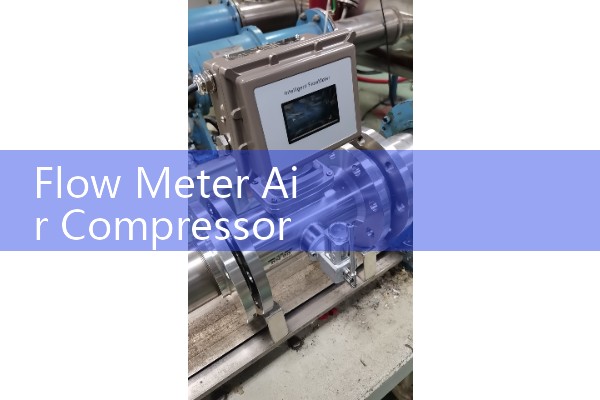
Put the meter before branch lines. That gives total plant air flow. If you want department level cost allocation, add smaller meters on each main branch. A food processor in the Philippines did this on three air headers. They found the packaging line used 40 percent of total air. That data changed the next compressor maintenance plan.
Most engineers skip straight run checks on compressed air because the piping is already tight. But swirl from elbows and valves creates a poor velocity profile. The flow meter reading shifts. Use a flow conditioner if the straight run is short.
Recommended Models from Silver Instruments
For compressed air mass flow measurement, the Silver Instruments thermal mass flow meter series works well. It covers pipe sizes from DN15 to DN300. The insertion probe can be installed under pressure with a retractable assembly. Inline versions have NPT threads or flanges. Output is 4-20 mA HART and Modbus RTU. The local display shows Nm3/h, kg/h, total flow, and gas temperature. ATEX Zone 1 or Zone 2 options are available for hazardous area air lines.
For high flow main headers, the Silver Instruments vortex flow meter is a good fit. It is available as a wafer or flanged body from DN25 to DN200. Pressure rating goes up to 40 bar. Temperature range is from minus 20 to 250 Celsius. It provides a 4-20 mA output plus pulse. Add a pressure transmitter for true standard volume or mass calculation.
For compressed air leak cost monitoring, many customers pair the flow meter with a Silver Instruments pressure transmitter and a paperless recorder. The recorder stores 24 months of data. You can export reports to show cost per department or shift.
How to Request a Quote
Send us your pressure in bar, temperature in Celsius, pipe size in DN, and flow range in kg/h or Nm3/h. Also tell us the pipe material and installation type, inline or insertion. Contact Silver Instruments at Tel: +86-135-1213-1526, WhatsApp: 86-135-12131526, or WeChat: +86 13512131526. Our technical team will reply with a model selection and price. You can also visit flow-meter.com.au for product specifications.
FAQ
Which flow meter is best for compressed air leak detection?
Thermal mass flow meters are the most practical. They measure low flow and base load directly in mass units.
Can I install a flow meter on an existing air compressor pipe?
Yes. Insertion thermal mass meters can be installed through a ball valve without shutting down the line. Inline meters need a short shutdown or a bypass.
What pipe sizes do you cover for air flow measurement?
We cover DN15 to DN300 for thermal mass flow meters and DN25 to DN200 for vortex flow meters.
What output signals do your air flow meters provide?
Most models provide 4-20 mA HART and Modbus RTU. Some also provide pulse output for total flow.
How much does a compressed air flow meter cost?
Price depends on pipe size, pressure rating, and whether you need inline or insertion. Send your pipe size and flow range for a detailed quote.