

 Current position > Product detail
『Dresser Flow Meter: Roots Rotary Piston Natural Gas Sizing Systems』Related information(v cone flow meter|rotary gas meter|gallon meter|gear meter|metal tube rotameter|glass tube rotameter|nutating disk meter|transit time ultrasonic flow meter|wedge flow meter|pd meters|hydraulic flow meter|ultrasonic water flow meter|water flow meter|air flow meter|magnetic water flow meter|oxygen flow meter|gas flow meter|argon flow meter|air velocity meter|gasoline flow meter|fuel flow meter|ultrasonic water meter|digital water meter|nitrogen flow meter|solid flow meter|Oxygen tank flow meter|digital water flow meter|diesel fuel flow meter|steam flow meter|02 flow meter|compressed air flow meter|oil flow meter|liquid flow meter)

Dresser Flow Meter: Roots Rotary Piston Natural Gas Sizing Systems
Quick Answer: A Dresser flow meter with a Roots rotary piston natural gas measuring chamber must be sized using actual flow in m3/h, line pressure in bar, gas temperature in °C, pipe size DN, and required turndown. Do not use standard m3/h alone. Silver Automation Instruments can check your sizing data, recommend a replacement meter or a matching pressure transmitter, and quote a complete natural gas metering loop.
What Is a Dresser Roots Rotary Piston Flow Meter?
A Dresser Roots rotary piston flow meter is a positive displacement gas meter. Two figure-eight impellers rotate in a measuring chamber. Each impeller revolution moves a fixed gas volume. The register counts revolutions. The output is volumetric flow at line conditions. Engineers use these meters for natural gas distribution, burner fuel gas lines, industrial gas sub-metering, and custody transfer in small to mid-size pipe runs.
In practice, these meters are common on DN40 to DN150 gas headers. Accuracy is often plus or minus 1 percent of reading across a 100:1 turndown. The meter body is available in cast iron, ductile iron, or steel depending on pressure class. Some models suit ANSI 125, ANSI 150, or ASME B16.5 Class 300 flanges. Pressure loss is low. This matters a lot in low pressure natural gas networks.
Which Sizing Data Does a Natural Gas System Need?
Most engineers skip this part. They give only standard cubic meters per hour. That is not enough. For a Dresser Roots rotary piston natural gas sizing system you need five values.
First, actual flow range at line conditions in m3/h. Include minimum, normal, and maximum values. Second, operating pressure in bar or kPa. Third, gas temperature in °C. Fourth, pipe size in DN. Fifth, gas composition or base density. If the gas contains carbon dioxide or nitrogen, compressibility changes. Sizing without gas composition causes errors at pressures above 4 bar.
Question: What pressure should you send?
Answer: Send the actual line pressure at the meter inlet, not the downstream equipment rating. A 6 bar pipeline with a 1 bar burner set is still sized at 6 bar if the meter is at the header inlet.
Question: What flow should you send?
Answer: Send minimum, normal, and maximum actual m3/h. We have seen many customer sites in Vietnam and the Philippines where the meter was oversized by 2 sizes because only peak flow was used. At low flows the rotary meter may still read, but the register gearing or pulse output may fall below the specified accuracy range.
How Do You Size a DN50 to DN100 Dresser Roots Rotary Meter?
Here is the thing. Positive displacement meters are different from vortex or thermal meters. You do not size them by velocity alone. You size them by chamber volume per revolution and rotor speed. Rotor speed must stay inside the meter range. Too low a speed means slow output and poor low-flow response. Too high a speed means wear and pressure drop.
A DN50 Dresser Roots model 5M works well on many 2 inch natural gas lines at 3 to 8 bar. Typical actual flow capacity may be between 80 and 160 m3/h depending on pressure loss limits. A DN80 model 7M or 10M may cover 250 to 500 m3/h actual flow at similar pressures. These numbers shift with inlet pressure. At 3 bar the same meter handles less standard volume than it can at 10 bar because the gas is less dense. This is why standard m3/h alone is not correct.
For a small LNG regasification plant in Indonesia, we recently checked a DN50 meter at 6 bar and 20 °C. Minimum flow was 12 m3/h actual, maximum flow was 95 m3/h actual. The DN50 Roots rotary meter fit well. The plant also needed a 4-20 mA HART pressure transmitter and a paperless recorder for temperature and pressure compensation. Silver Instruments supplied the transmitter and recorder. The meter itself was a Dresser Roots unit already on site.
Dresser Roots Model Reference vs Silver Support
Dresser Roots rotary meters are widely known. Common models include the 5M, 7M, 10M, 11M, and 16M. These are often installed at gas district stations, factory boi
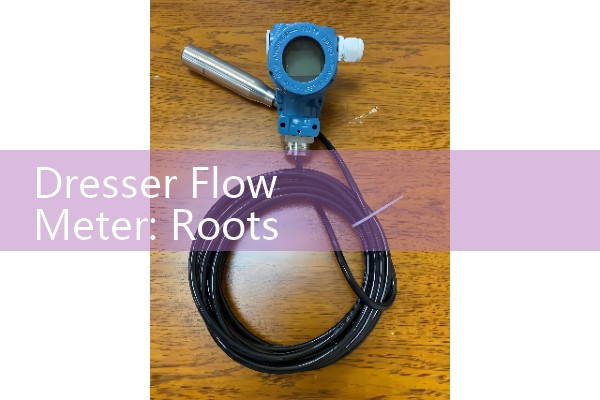
Silver Automation Instruments does not claim to be the Dresser brand. We help customers verify sizing and source a suitable replacement or alternative gas flow meter. This includes thermal mass flow meters for low flow natural gas consumption monitoring and vortex flow meters for larger industrial gas lines. For pressure and temperature correction we supply transmitters, PT100 sensors, and paperless recorders. This keeps the whole metering loop traceable.
Common Errors in Roots Rotary Natural Gas Sizing
Oversizing is the most common error. A meter sized only for peak boiler load often runs below 5 percent of capacity most of the time. With a positive displacement meter the low flow accuracy may stay acceptable, but the pulse output can become very slow. The control system cannot track consumption. This creates billing disputes in sub-metering.
Another error is ignoring inlet pressure. A Roots rotary piston natural gas sizing system depends on actual cubic meters per hour. If the meter is installed before a pressure reduction valve, use upstream pressure. If installed after a regulator, use downstream pressure. Do not mix them. We have seen this mistake at a food processing plant in Mexico. The meter was specified at 2 bar but installed at 9 bar. The flow range shifted enough to make the meter undersized at peak hour.
A third error is forgetting gas temperature. Natural gas temperature at a compressor discharge can reach 50 °C or 60 °C. At a pressure reduction station the gas may drop to 0 °C due to Joule-Thomson cooling. Actual volume changes with temperature. Always include inlet gas temperature when you request a sizing check.
FAQ: Dresser Flow Meter and Roots Rotary Natural Gas Sizing
What is a Dresser Roots rotary piston flow meter used for?
It measures natural gas volume at line conditions. It is used on gas distribution lines, boiler fuel gas feeds, industrial natural gas sub-meters, and small custody transfer installations from DN40 to DN150.
How accurate is a Dresser Roots rotary meter?
Typical accuracy is plus or minus 1 percent of reading across a wide turndown. This assumes correct sizing, clean gas, and proper lubrication for the meter. Dirty gas or liquid carryover reduces accuracy.
What turndown can a Roots rotary piston natural gas meter handle?
Many models are rated for 100:1 turndown or more. In practice, the pulse transmitter and register resolution limit the lower end. Confirm minimum flow in actual m3/h with the meter capacity at your operating pressure.
Can Silver Automation Instruments supply a Dresser Roots meter?
We are not the Dresser brand. We can check your sizing, recommend a replacement positive displacement gas meter, or propose a thermal mass flow meter or vortex flow meter for natural gas. We also supply pressure transmitters, PT100 sensors, and paperless recorders for flow correction.
What information should I send for a natural gas meter quote?
Send gas type, line pressure in bar, temperature in °C, pipe size DN, minimum normal and maximum flow in m3/h, flange standard, and output required. Options include pulse, 4-20 mA HART, Modbus, or a totalizer display.
Get a Sizing Check from Silver Automation Instruments
Send us your gas type, pressure in bar, temperature in °C, pipe size DN, flow range in m3/h, and required output signal. We will check the sizing against Dresser Roots rotary piston natural gas sizing systems and recommend a workable solution. We serve industrial users and distributors in Southeast Asia, Oceania, Latin America, Africa, and the Middle East. We have shipped gas metering instruments to Australia, Vietnam, the Philippines, Nigeria, Chile, and Saudi Arabia.
Tel: +86-135-1213-1526
WhatsApp: 86-135-12131526
WeChat: +86 13512131526