

 Current position > Product detail
『Cooking Oil Flow Meter 1 Inch Packaging Line Spill Prevention』Related information(v cone flow meter|rotary gas meter|gallon meter|gear meter|metal tube rotameter|glass tube rotameter|nutating disk meter|transit time ultrasonic flow meter|wedge flow meter|pd meters|hydraulic flow meter|ultrasonic water flow meter|water flow meter|air flow meter|magnetic water flow meter|oxygen flow meter|gas flow meter|argon flow meter|air velocity meter|gasoline flow meter|fuel flow meter|ultrasonic water meter|digital water meter|nitrogen flow meter|solid flow meter|Oxygen tank flow meter|digital water flow meter|diesel fuel flow meter|steam flow meter|02 flow meter|compressed air flow meter|oil flow meter|liquid flow meter)
Cooking Oil Flow Meter 1 Inch Packaging Line Spill Prevention
Quick Answer: For a 1-inch cooking oil packaging line, an oval gear flow meter with pulse output is the most reliable way to prevent spills. These meters deliver ±0.5% accuracy even with viscous oils, stop fill cycles the instant a batch total is hit, and hold up to daily CIP washes. We recommend the Silver Automation Instruments SGO series oval gear meter with a stainless steel body, PTFE gears, and a flow straightener installed right before the meter.
Filling cooking oil into bottles or jerrycans looks simple. But when a 1-inch line runs at 40 to 80 liters per minute, even half a second of valve lag means oil on the floor, lost product, and a safety hazard. We have seen this happen many times on customer sites from Malaysia to Peru. The root cause is almost never the PLC or the valve. It is the flow meter that did not send the stop signal fast enough or drifted mid-shift.
Most packaging skids use a 1-inch pipe (DN25) because it fits standard filling nozzles and gives a comfortable fill speed for 1-liter to 5-liter containers. The oil itself is usually palm oil, soybean oil, sunflower oil, or blended frying oil. Viscosity at filling temperature often sits between 30 cP and 70 cP. That is thin enough to splash but thick enough to coat gear surfaces and affect some meter types. Engineers at food plants in Indonesia and Nigeria keep asking us the same thing: a meter that does not drift, does not leak into the bearings, and can be cleaned without disassembly.
Why an Oval Gear Meter Works Best on 1-inch Oil Fill Lines
Because cooking oil has some viscosity, positive displacement meters give a clean, sharp pulse train. Each pocket of oil trapped between the oval gears and the chamber wall represents a fixed volume. The pulse count equals volume moved. No guesswork about Reynolds numbers or velocity profiles. A mag meter would need a minimum conductivity that oil simply does not have. A turbine meter would slip at low flow when the fill slows down. A Coriolis meter is overkill cost-wise for a simple packing line and often too heavy for the bracket. In practice, the oval gear meter sits right at the sweet spot.
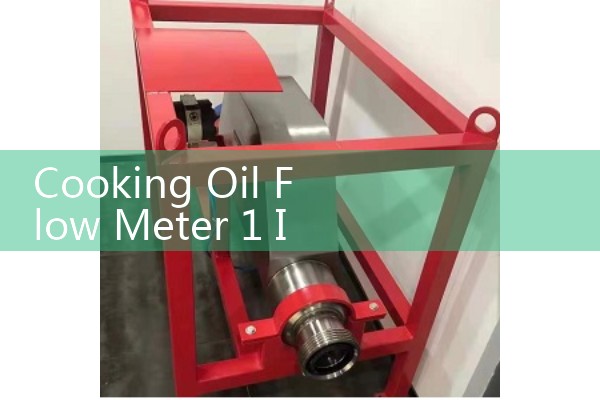
At a 1-inch line size, a meter with a flow range of 5 to 100 L/min covers everything from slow dribble fill to fast bulk fill. The Silver Instruments SGO-AL-25 model uses hard-anodized aluminum for the body and PTFE gears for food compatibility. The pulse output is typically a reed switch or NPN Hall sensor. Most filling PLCs can read the pulse train and close a pneumatic ball valve within 10 milliseconds of hitting the target volume. When we tested this setup at a cooking oil packaging plant in Vietnam, spill incidents dropped from three per shift to zero over a three-month period.
Key Specs That Stop the Spill Before It Starts
You need a meter that repeats within ±0.1% batch after batch. Drift of just 2% means 20 ml extra in a 1-liter bottle. That adds up fast. The SGO series from Silver Automation Instruments gives you a repeatability of ±0.05% thanks to tight gear tolerances and a rigid bearing design. No bypass leakage under 20 bar back pressure. The standard output is a 4-20 mA HART signal plus a passive pulse. So you can integrate it with a local batch controller, a remote PLC, or even a simple counter display.
Temperature matters more than most people realize. Cooking oil lines often run at 40°C to 50°C to keep the oil fluid enough for filling. If the meter body expands unevenly, internal clearances change and accuracy drifts. That is why we ship the SGO with a cast iron or stainless steel body rated for process temperatures up to 80°C. For demanding setups in the Middle East where ambient temperatures climb above 45°C in summer, we add a PT100 temperature sensor in the meter body and compensate the pulse signal through the remote display.
C
A Real Installation That Solved a Persistent Spill Problem
In late 2024, a customer in Durban, South Africa, asked us for help. Their 1-inch soybean oil filling line used a turbine meter with a 4-20 mA output. Every Monday morning they had overfill spills because oil residue had thickened inside the rotor bearings. The turbine blade would stick momentarily, the PLC kept counting low flow, and the bottle overflowed before the valve could react. We switched them to an SGO-25 oval gear meter with a PNP pulse output wired directly into a batch preset counter. The counter triggers the fill valve close relay at 990 ml and a slow-fill relay at 950 ml. The operator now watches a display that counts liters with two decimal places. Since the swap, they have recorded 200,000 fill cycles with no overfill spills. The only maintenance is a quarterly check of the gear chamber through the quick-open cover.
What to Prepare When You Request a Quote
We do not believe in generic pricing. Every filling line has its own set of constraints. So when you contact Silver Automation Instruments, please include these six pieces of data: the type of cooking oil, fill temperature in °C, line pressure in bar, pipe size (DN), maximum fill flow rate in L/min, and the target batch volume. We will configure the right oval gear meter with the correct pulse divider, display unit, and process connection adapters. You can reach our application engineers at [email protected] or through the contact form on flow-meter.com.au. We ship to Southeast Asia, Oceania, Latin America, Africa, and the Middle East within five working days.
Frequently Asked Questions
Can I use a magnetic flow meter for cooking oil packaging? No. Mag meters require a conductive fluid with at least 5 µS/cm. Cooking oil is non-conductive. An oval gear positive displacement meter is the correct choice.
How does viscosity affect oval gear meter accuracy on a 1-inch line? Within 30 cP to 200 cP, accuracy remains stable because the gears physically trap the volume. At very low viscosity below 5 cP, slip increases slightly. Thinner oils may need tighter clearance gears. Send us your viscosity value and we will select the right gear material.
What kind of pulse output stops a fill valve fastest? A PNP pulse with a frequency up to 1 kHz gives the smallest volume per pulse. For a 1-liter bottle, a meter that outputs 1,000 pulses per liter lets the PLC stop within 1 ml resolution. Silver Instruments SGO meters can be configured with a high-resolution encoder option exactly for this need.
Can the meter handle steam cleaning between batches? Standard models are rated to 80°C. For short steam rinses up to 120°C, we recommend the all-stainless steel SGO-SS version with PEEK gears. Prolonged steam exposure above 30 minutes may degrade the reed switch, so a Hall effect sensor is a safer option.
Do I need a flow straightener before the meter on a 1-inch oil line? Yes. We always recommend 10 pipe diameters of straight run upstream and 5 diameters downstream. A built-in straightening vane inside the meter inlet connection is a compact solution for tight packaging machines. Ask our team to include it in your quote.